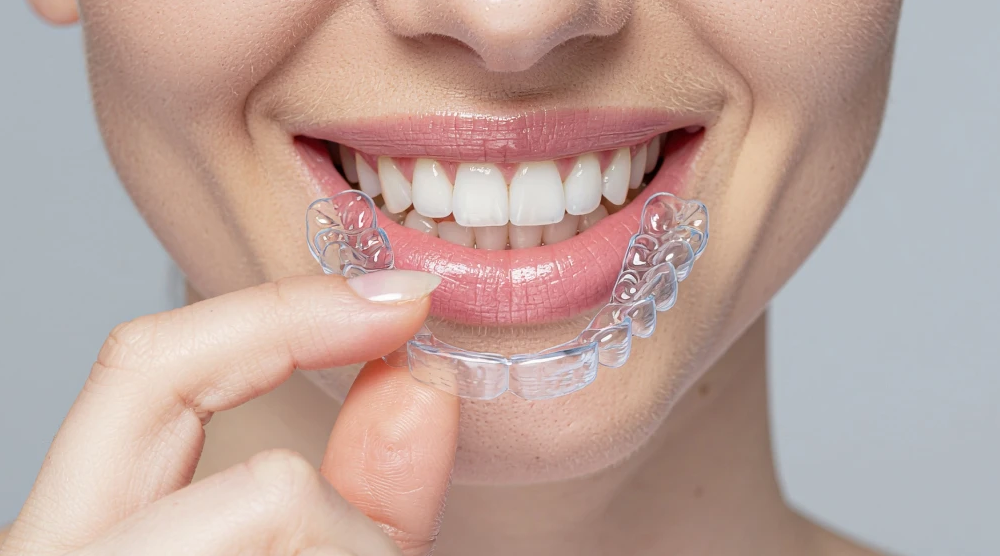

Anyone who uses a night guard knows that after some time, odours, residue, or an unpleasant feeling can develop on its surface. For this reason, knowing how to clean a dental night guard properly is important not only for keeping it clean, but also for preserving its shape and properties for longer.
A night guard remains in contact with the teeth, saliva, and oral tissues for several hours. Regular cleaning therefore helps remove residue and deposits that can build up during use.
The good news is that daily maintenance is generally simple. Aggressive products are not necessarily required: cool water, a suitable brush, and proper drying can already make a big difference. However, instructions may vary depending on the material and type of device, so it is always useful to follow the specific advice provided by your dentist.
How to Clean a Dental Night Guard Every Day?
The best time to clean the night guard is generally immediately after removing it from the mouth, before saliva and residue dry on the surface.
For daily cleaning, you can start by rinsing the device with cool water. It can then be gently brushed using a dedicated toothbrush and a small amount of mild liquid soap, followed by thorough rinsing.
There is no need to apply excessive pressure. The aim is to clean all surfaces of the night guard, including the areas that are more difficult to reach, without damaging the material.
Should You Wash the Night Guard After Every Use?
Regular cleaning after use is a good habit.
During the night, the night guard remains inside the mouth for several hours and is continuously exposed to saliva. Delaying cleaning can encourage residue to build up on the surface.
For this reason, the most practical solution is to make it part of your morning routine: remove the night guard, rinse it, and clean it before storing it.
Can You Clean a Night Guard with Toothpaste?
This is one of the most common questions.
Toothpaste may seem like a natural choice because it is used every day to clean the teeth. However, not all toothpastes are suitable for every removable dental device.
Some formulas may be too abrasive for certain materials and, over time, can create small scratches on the surface.
For this reason, it is preferable to check the cleaning instructions for your specific night guard and, if in doubt, use a cleaning product recommended by the professional who made it.
How to Deep Clean a Dental Night Guard?
In addition to daily cleaning, it may be useful to perform a deeper cleaning from time to time, especially when odours or deposits are noticeable on the surface.
There are effervescent products specifically formulated for certain removable dental devices. However, their compatibility depends on the material of the night guard.
Before regularly using this type of product, it is advisable to check whether it is suitable for the specific material of your device.
Can You Wash a Night Guard with Hot Water?
It is better to avoid very hot or boiling water.
Heat can alter the shape of some materials used to make night guards and mouthguards. Even a small deformation may affect the way the device fits over the teeth.
For normal cleaning, it is therefore preferable to use cool water or follow the temperature instructions provided by the manufacturer or dentist.
What Should You Avoid Using to Clean a Dental Night Guard?
The idea that a stronger cleaning product will provide better cleaning can easily lead to the use of unsuitable substances.
In general, it is better to avoid particularly aggressive solutions, boiling water, and treatments that are not recommended for the material of the device.
Home remedies such as baking soda, vinegar, or other products should also only be used if they are compatible with the specific night guard. Dental devices can be made from different materials, and what is suitable for one type may not be appropriate for another.
If there are stains or deposits on the surface that cannot be removed with normal cleaning, it is preferable to ask your dentist for advice rather than increasing the strength or concentration of the products being used.
How to Store a Night Guard After Cleaning?
Cleaning the night guard properly and then placing it in a closed container while it is still wet is not ideal.
After washing, it is useful to let it dry according to the instructions for the device and store it in its case when it is not being used.
For many mouthguards, a durable and ventilated case is recommended to protect the device during storage.
The case should also be kept clean. There is little benefit in carefully cleaning the night guard and then placing it every day in a dirty container.
Why Does a Night Guard Turn Yellow or Develop a Bad Smell?
With regular use, deposits can form on the surface of the device. Insufficient or irregular cleaning can make these changes more noticeable.
If the night guard begins to develop a persistent odour even after proper cleaning, has deposits that are difficult to remove, or the material appears significantly different from when it was new, it may be useful to have it checked.
More intensive cleaning is not always the solution. In some cases, it may be necessary to assess the condition of the device and determine whether it is still suitable for use.
When Should a Night Guard Be Replaced?
There is no single lifespan that applies to all night guards.
How long it lasts depends on the material, the amount of pressure applied to the teeth, bruxism, frequency of use, and maintenance.
People who grind or clench their teeth heavily during the night may gradually create signs of wear on the surface. The night guard should therefore be checked periodically, especially if it develops cracks, becomes deformed, or no longer fits the teeth as it did before.
Night guards are often used during sleep specifically to help protect the teeth from the effects of grinding and clenching.
Frequently Asked Questions About Cleaning a Dental Night Guard
How Often Should You Clean a Night Guard?
It is advisable to clean it regularly after use, generally every day. Rinsing and gentle cleaning help prevent saliva and residue from remaining on the surface for long periods.
Can I Wash a Night Guard with Soap?
For many devices, a small amount of mild liquid soap can be used together with a toothbrush, followed by thorough rinsing. However, it is important to follow the specific instructions for your own night guard.
Can I Put a Night Guard in Boiling Water?
No. Very hot water can deform some materials and change the way the device fits over the teeth. Cool water is generally preferable.
Can Effervescent Cleaning Tablets Be Used for a Night Guard?
They can be used for some devices, but it is necessary to check whether the product is compatible with the material of your night guard. If you are unsure, it is better to ask your dentist.
How Can You Remove a Bad Smell from a Night Guard?
Thorough daily cleaning and proper storage can help. If the smell persists despite cleaning, it is useful to have the device checked before using stronger cleaning products.
Should the Night Guard Case Be Cleaned Too?
Yes. The case should also be kept clean and dry according to the instructions for the device, because the night guard is stored inside it every day.
Knowing how to clean a dental night guard mainly means creating a simple and consistent routine: rinse it after use, clean it gently, avoid high temperatures, and store it properly. Regular maintenance helps keep the device cleaner and also makes it easier to notice any signs of wear or changes in its shape.